Carotid Artery Disease in Virginia
In Virginia, where cardiovascular diseases remain a major health concern, early detection and management of carotid artery disease can prevent life-changing complications. The specialists at Shenandoah Valley Surgical Associates (SVSA) in Fishersville use advanced imaging tools such as carotid ultrasound to identify the problem before symptoms appear when prevention is still possible.
Every year, hundreds of thousands of Americans experience a stroke – one of the leading causes of long-term disability and death, yet many strokes can be prevented through early detection of carotid artery disease.
Carotid artery disease is often called a “silent threat” because it can develop for years without causing any noticeable warning signs. Understanding how it develops, who is at risk, and how it can be detected early is essential to protecting your brain and your life.
How the Carotid Arteries Work and What Stenosis Means
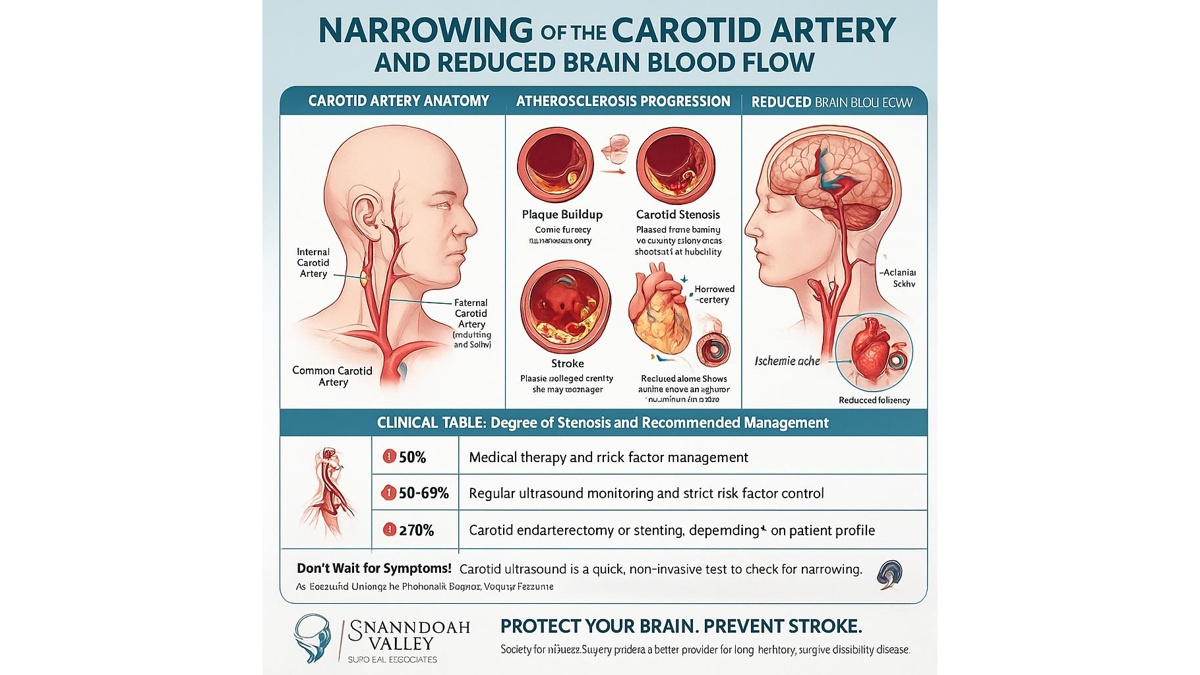
The carotid arteries are the two main blood vessels on either side of your neck that deliver oxygen-rich blood from the heart to the brain. Each artery divides into two branches: the internal carotid artery, which supplies the brain, and the external carotid artery, which supplies the face and scalp.
Over time, fatty deposits (plaques) — made up of cholesterol, calcium, and inflammatory cells – can build up along the inner walls of these arteries. This process is known as atherosclerosis. When the buildup becomes significant, the artery narrows, restricting blood flow to the brain. This narrowing is called carotid stenosis.
If a piece of plaque breaks off or a blood clot forms at the narrowed site, it can block blood flow entirely, leading to an ischemic stroke. Even brief interruptions in blood supply can damage brain tissue, resulting in symptoms such as facial drooping, weakness, or speech difficulties.
The Link Between Carotid Disease and Stroke
Carotid artery disease accounts for roughly 10–15% of all ischemic strokes. The danger is not only the narrowing itself but also the instability of the plaque. When a fragile plaque ruptures, it can send tiny emboli (blood clots) directly into the brain’s arteries. These micro-emboli can cause transient ischemic attacks (TIAs) often called “mini-strokes.”
A TIA may last only a few minutes but serves as a critical warning sign. Up to one-third of people who experience a TIA will suffer a full stroke within a year if the underlying cause is not treated.
Why Carotid Disease Often Goes Undetected
The progression of carotid stenosis is typically slow and painless. Because the brain has a rich network of collateral vessels that can temporarily compensate for reduced flow, patients may not notice any symptoms until the blockage becomes severe. That’s why routine vascular screening, especially for high-risk individuals, is so important.
In Fishersville, VA, vascular specialists at SVSA perform carotid ultrasound examinations – a quick, non-invasive, and accurate way to detect even minor narrowing before symptoms occur.
Main Risk Factors and Early Symptoms
Stroke prevention depends on addressing modifiable risk factors. Carotid artery disease shares many of the same risk factors as other forms of atherosclerosis. While genetics play a role, lifestyle and chronic health conditions are the most powerful contributors.
The leading risk factors include smoking, high cholesterol, high blood pressure, diabetes, obesity, and a sedentary lifestyle. Age also increases the likelihood of developing carotid disease — most cases are diagnosed after the age of 55. Men are generally affected slightly earlier than women, although the risk becomes similar with advancing age. A family history of stroke or cardiovascular disease further raises the likelihood.
Recognizing the Symptoms
Carotid artery disease often produces no symptoms until blood flow to the brain becomes critically reduced or blocked. However, warning signs may appear in the form of a transient ischemic attack (TIA).
Common TIA or Stroke Symptoms Include
- Sudden weakness or numbness on one side of the body or face
- Difficulty speaking or understanding speech
- Temporary loss of vision in one eye (described as a “curtain” coming down)
- Dizziness or loss of balance
If any of these symptoms occur – even if they disappear within minutes it is a medical emergency. Immediate evaluation can prevent a full stroke.
The Silent Progression
Because the disease develops silently, many people first learn they have carotid stenosis during a routine physical exam when their doctor hears a “bruit” an abnormal whooshing sound over the neck arteries detected with a stethoscope. This noise indicates turbulent blood flow caused by narrowing and is a common reason for ordering a carotid ultrasound.
Early detection allows for timely treatment, reducing stroke risk dramatically.
Diagnostic Methods (SVSA Ultrasound and Imaging)
Accurate diagnosis of carotid artery disease is essential for preventing stroke and guiding effective treatment strategies.
Diagnosing carotid artery disease begins with a detailed medical history and a physical examination. During this exam, your doctor may use a stethoscope to listen over the neck for a bruit a “whooshing” sound that suggests turbulent blood flow through a narrowed artery.
However, a bruit alone does not confirm the diagnosis. For accurate assessment, non-invasive vascular imaging is the standard of care. At Shenandoah Valley Surgical Associates (SVSA) in Fishersville, Virginia, vascular specialists use advanced diagnostic tools to measure blood flow, visualize arterial plaque, and determine the degree of stenosis (narrowing).
Carotid Ultrasound (Duplex Scan)
The carotid ultrasound is the cornerstone of carotid artery evaluation. It uses high-frequency sound waves to create images of the arteries and measure how fast blood moves through them. If the blood flow is faster than normal, it suggests a narrowing in that area.
This test is painless, radiation-free, and takes about 30 minutes. It allows physicians to:
- Detect plaque buildup
- Assess the degree of narrowing
- Monitor disease progression over time
At SVSA, ultrasound imaging also plays a crucial role in stroke prevention, as it can reveal early signs of arterial disease long before symptoms develop.
CT and MR Angiography
If ultrasound results show significant narrowing or if surgical treatment is being considered, doctors may recommend CT angiography (CTA) or MR angiography (MRA) for a more detailed view.
- CTA uses X-rays and contrast dye to provide high-resolution, three-dimensional images of the carotid arteries and brain circulation.
- MRA uses magnetic fields and radio waves instead of radiation, making it ideal for patients who cannot tolerate iodinated contrast agents.
These scans allow vascular surgeons to plan interventions with precision, identifying not only the extent of stenosis but also the structure of the plaque — whether it is stable or at risk of rupture.
Cerebral Angiography
In select cases, cerebral angiography (also called digital subtraction angiography) is performed. This minimally invasive test involves inserting a thin catheter into an artery usually in the groin and guiding it up to the carotid arteries. Contrast dye is then injected to visualize the vessels under X-ray.
While slightly more invasive, this test remains the gold standard for precise measurement and can be combined with immediate treatment such as stenting if needed.
Modern Treatment Approaches – Medications, Endarterectomy, and Stenting
Treatment for carotid artery disease depends on how severely the artery is narrowed, whether symptoms have occurred, and the patient’s overall health. The goal is always the same – to reduce the risk of stroke and maintain healthy blood flow to the brain.
Medical Management
For patients with mild narrowing (usually less than 50%), the primary approach is medical therapy and risk factor control. This includes:
- Antiplatelet drugs (such as aspirin or clopidogrel) to prevent blood clots.
- Statins to lower cholesterol and stabilize plaque.
- Blood pressure and diabetes management to prevent further vessel damage.
Lifestyle modification – quitting smoking, maintaining a healthy diet, and regular exercise plays a crucial role in halting disease progression.
Carotid Endarterectomy (CEA)
For moderate to severe narrowing (especially ≥70% stenosis) or when symptoms such as TIAs have occurred, carotid endarterectomy (CEA) is often recommended.
This surgical procedure involves a small incision in the neck to open the affected artery. The surgeon then removes the plaque buildup, restoring smooth blood flow to the brain. The artery is closed with fine sutures or a patch to prevent re-narrowing.
CEA remains the gold standard treatment for suitable patients and has been proven through multiple large studies to significantly reduce the risk of future strokes.
Carotid Artery Stenting (CAS)
For patients who are not ideal candidates for open surgery due to age, anatomy, or other health conditions carotid stenting offers a minimally invasive alternative.
During this procedure, a catheter is inserted (usually through the femoral artery in the groin) and guided to the carotid artery. A tiny balloon is inflated to open the narrowed section, and a metal mesh tube (stent) is placed to keep the artery open.
Modern stents are highly effective and safe. They are often used with embolic protection devices, which catch any small debris that could otherwise travel to the brain during the procedure.
Degree of Stenosis and Recommended Management
| Degree of Stenosis | Recommended Strategy |
|---|---|
| < 50% | Medical therapy and risk factor management |
| 50–69% | Regular ultrasound monitoring + strict risk control |
| ≥ 70% | Carotid endarterectomy or stenting (depending on patient profile) |
After Treatment and Follow-up
Recovery after carotid procedures requires careful monitoring and lifestyle adjustments to maintain long-term vascular health.
Recovery after carotid surgery or stenting typically takes only a few days, though each patient’s recovery plan is individualized. Ongoing follow-up includes regular carotid ultrasound scans to monitor for re-narrowing, continued antiplatelet therapy, and strict management of cholesterol and blood pressure.
Prevention and Long-Term Monitoring
Preventing carotid stenosis or slowing its progression after treatment requires a lifelong commitment to vascular health. Even when plaque buildup has already begun, patients can significantly reduce their risk of stroke through consistent management and lifestyle adjustments.
Healthy Habits to Protect the Arteries
The same steps that protect your heart also protect your carotid arteries. Avoiding tobacco use is the single most effective preventive measure. Smoking accelerates atherosclerosis, stiffens arteries, and increases the likelihood of blood clot formation.
A balanced diet rich in fruits, vegetables, whole grains, and lean protein supports healthy blood vessels. Limiting saturated fats and salt helps control cholesterol and blood pressure two major contributors to carotid stenosis.
Regular physical activity strengthens the cardiovascular system and improves circulation. A simple daily walking routine or light aerobic exercise can lower stroke risk by as much as 30–40%, according to vascular health studies.
Managing Chronic Conditions
If you have diabetes, hypertension, or high cholesterol, strict control of these conditions is essential. High blood sugar and blood pressure damage the arterial lining, making plaque buildup more likely.
Regular check-ups with your healthcare provider ensure that cholesterol levels, blood pressure, and glucose remain within healthy ranges. Statins, antihypertensive drugs, and antiplatelet therapy are typically prescribed to maintain optimal vascular protection.
Follow-Up After Surgery or Stenting
After carotid endarterectomy (CEA) or carotid artery stenting (CAS), patients require regular follow-up to ensure the artery remains open and healthy.
At Shenandoah Valley Surgical Associates (SVSA) in Fishersville, Virginia, vascular surgeons use ultrasound monitoring to track blood flow and detect any early signs of restenosis (re-narrowing).
Most patients undergo ultrasound testing at 6 months, 1 year, and then annually. Continued lifestyle improvements and adherence to prescribed medication are key to preventing recurrence.
FAQ: 5 Common Questions About Carotid Artery Disease
How can I know if I have carotid artery disease?
Most people with carotid artery disease have no symptoms until the narrowing is severe. A painless carotid ultrasound is the best way to detect it early. Your doctor may recommend screening if you have risk factors like smoking, high cholesterol, diabetes, or a family history of stroke.
What is carotid endarterectomy, and is it safe?
Carotid endarterectomy (CEA) is a surgical procedure that removes plaque from the artery to restore normal blood flow to the brain. It’s considered the gold standard for treating significant stenosis and has a proven record of reducing stroke risk.
Is a carotid stent dangerous?
Modern carotid stents are safe and effective. They are typically used for patients who cannot undergo open surgery. During the procedure, doctors use protective devices to catch any small particles, minimizing stroke risk. Most patients recover within 24–48 hours and return to normal activities quickly.
Can I fly after carotid surgery or stenting?
Yes. Most patients can safely travel or fly within two weeks after the procedure, provided there are no complications. However, it’s important to follow your doctor’s post-operative instructions and schedule follow-up visits before planning long-distance travel.
How can I prevent carotid disease from returning?
Continue antiplatelet therapy, maintain healthy cholesterol and blood pressure levels, and avoid smoking. Routine ultrasound checks and medical supervision help ensure long-term success. At SVSA, patients receive personalized care plans to maintain open arteries and prevent future strokes.
Take Control of Your Vascular Health
Carotid artery disease may be silent — but the consequences are not. Stroke can strike without warning, yet it is largely preventable through early detection and proper care.
Author:
Dr. William L. Faulkenberry II, MD, FACS

Sources
- Society for Vascular Surgery (SVS) – Carotid Artery Disease
- Centers for Disease Control and Prevention (CDC) – Stroke Prevention
- National Institutes of Health (NIH) – Carotid Endarterectomy Overview
- Mayo Clinic — Carotid Artery Disease: Symptoms & Causes
- Johns Hopkins Medicine – Carotid Artery Disease