When you’re facing surgery—whether it’s a vascular procedure, hernia repair, or another treatment—it’s natural to have questions. Understanding what happens before, during, and after surgery can make the experience safer and less stressful.
At Shenandoah Valley Surgical Associates (SVSA) in Fishersville, Virginia, we believe that clear patient information is essential to excellent care. This guide answers the most common questions our patients ask about preparing for surgery, what to expect on the day of the procedure, and how recovery works afterward.
Preparing for Surgery
Good preparation is one of the most important steps toward a smooth operation and quick recovery. Even minor vascular procedures require planning to ensure the body is ready and risks are minimized.
Review Your Medications
Two weeks before surgery, make a complete list of all medications, supplements, and vitamins you take. Some—like blood thinners (warfarin, clopidogrel, aspirin), herbal supplements, or anti-inflammatory drugs—can increase bleeding risk. Your vascular surgeon or anesthesiologist will tell you which medications to stop or adjust. Never stop taking prescriptions on your own.
Health Optimization
Patients with chronic conditions such as diabetes, hypertension, or heart disease should aim for the best possible control before surgery. Maintaining stable blood sugar and blood pressure reduces complications and supports wound healing.
Lifestyle Preparation
Stop smoking. Nicotine reduces oxygen in the blood and slows healing. Quitting even a few weeks before surgery improves outcomes.
Eat well and stay hydrated. A balanced diet supports tissue repair. Avoid alcohol for at least 48 hours before the procedure.
Stay active. Light activity (like walking) helps circulation, unless your doctor advises rest.
Pre-Operative Testing
Depending on your health, your SVSA care team may order blood tests, an electrocardiogram (ECG), ultrasound imaging, or other assessments. These tests confirm that your body is ready for anesthesia and identify any conditions that need attention.
Plan Ahead
- Arrange for transportation home if you’re having outpatient surgery.
- Pack comfortable, loose-fitting clothes.
- If your procedure requires an overnight stay, bring only essentials—ID, insurance card, medication list, and personal items.
At SVSA, your surgeon and nurses will walk you through every instruction. Following these surgery preparation tips in Virginia ensures that your day runs smoothly and safely.
The Day of the Procedure: What to Expect
Knowing what will happen on the day of surgery helps reduce anxiety and keeps you confident in your care team.
Arrival and Check-In
You’ll receive arrival instructions from SVSA before the procedure. Plan to come early to complete registration and review your consent forms. You’ll meet your nurse and anesthesiology provider, who will explain each step and answer questions.
Pre-Operative Area
Before surgery, your vital signs are checked, and an IV line is started for fluids and medication. Your surgical site will be marked and cleaned with antiseptic.
For vascular operations, real-time imaging such as ultrasound or fluoroscopy may be used to guide the surgeon during the procedure. This technology increases accuracy and reduces incision size.
During Surgery
Depending on the procedure, you may have:
- Local anesthesia – numbs a small area; you remain awake.
- Regional anesthesia – numbs a limb or body region.
- General anesthesia – you are fully asleep.
The vascular surgery team includes your surgeon, anesthesiologist, nurses, and technologists who monitor vital signs and assist throughout the operation.
Procedure duration:
- Minor endovascular interventions: 30–90 minutes.
- Medium surgical repairs: 1–3 hours.
- Complex vascular reconstructions: 3 hours or longer.
After Surgery
You’ll be taken to a recovery area where nurses monitor your heart rate, blood pressure, and oxygen. Pain management begins immediately to keep you comfortable. Most patients wake within 30–60 minutes after anesthesia.
Some procedures are outpatient meaning you can go home the same day once you’re stable. Others may require short hospital observation. The care team will discuss this in advance.
Communication and Updates
While you’re in surgery, SVSA staff keep your designated family member informed. Once finished, the surgeon meets with your family to explain how the procedure went and what to expect during recovery.
This transparent process ensures that patients and families remain confident and informed every step of the way.
The Postoperative Period
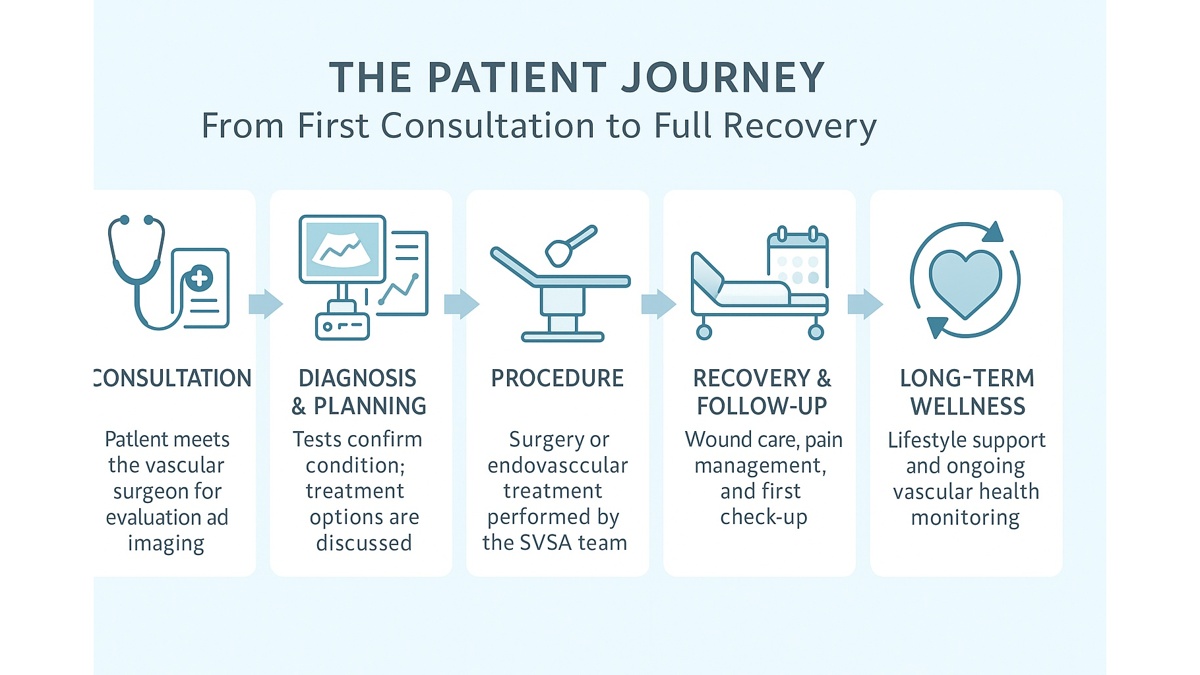
Recovery after surgery is just as important as the procedure itself. Proper follow-up care ensures good healing, prevents complications, and helps you return to normal activity as quickly and safely as possible.
Immediate Recovery
After your procedure, you will stay in a monitored recovery area until your vital signs are stable. Nurses will assess your comfort level, pain control, and circulation especially important after vascular surgery. You may have compression wraps or dressings to support blood flow and minimize swelling.
Once you are fully awake and your surgeon approves, you will be transferred either to a short-stay observation room or discharged home if the procedure was outpatient.
Pain and Wound Care
Mild soreness or fatigue is common for several days. Your doctor will prescribe or recommend pain medication as needed.
- Keep your incision clean and dry.
- Follow your wound-care instructions exactly — especially if you have stitches, staples, or adhesive strips.
- Avoid soaking in tubs or pools until cleared by your surgeon.
If you notice increasing redness, swelling, drainage, or fever, contact the SVSA office right away. Early reporting prevents complications.
Activity and Mobility
Light walking is encouraged soon after surgery to improve circulation and prevent blood clots. Avoid heavy lifting or strenuous activity until your surgeon confirms it is safe. For vascular procedures, movement helps keep blood vessels open and reduces swelling.
Follow-Up Visits
Your first postoperative visit is usually scheduled within 7–10 days. During this appointment, your vascular surgeon will check your incision, review any imaging or lab results, and discuss your progress. Additional follow-ups may be planned over the next few weeks to monitor healing and circulation.
Long-Term Care
Recovery does not end when the incision heals. SVSA emphasizes long-term vascular health:
- Maintain control of blood pressure, cholesterol, and diabetes.
- Stop smoking completely.
- Eat a heart-healthy diet and stay active.
These steps protect your surgical results and reduce the chance of recurrence.
Finances, Insurance, and Contact Information
At SVSA, we understand that financial planning is an essential part of surgical care. Our team is committed to transparency and guidance throughout the billing process.
Insurance and Coverage
Most vascular and general surgical procedures are covered by major insurance providers. SVSA participates in many national and regional insurance networks, including Medicare and most private plans. If you are uncertain about coverage, our billing specialists can verify your benefits before the procedure.
Referrals and Authorizations
In many cases, you do not need a referral to see a vascular surgeon. However, some insurance plans require preauthorization for specific imaging tests or inpatient admissions. SVSA’s administrative team will handle all necessary approvals to minimize delays.
Out-of-Pocket Costs
Co-payments and deductibles depend on your individual plan. You’ll receive a written estimate before the procedure. Payment plans are available for patients without insurance or with high deductibles.
Common Patient Questions and Short Answers
| Topic | Short Answer |
|---|---|
| Do I need a referral? | No, patients can schedule directly. |
| Is hospitalization required? | Depends on the procedure; many are outpatient. |
| How do I pay? | SVSA accepts most insurance plans and offers flexible options. |
| When can I drive again? | Usually within a few days, once you’re off pain medication and cleared by your doctor. |
| Who can I call with concerns? | SVSA office or on-call nurse, available 24/7 for urgent issues. |
This table offers a quick overview for patients preparing for surgery in Virginia, addressing the most frequent questions received at SVSA.
Frequently Asked Questions (FAQ)
How should I prepare for vascular surgery?
Follow your surgeon’s instructions carefully. Usually, you’ll need to stop eating the night before, take only approved medications, and arrange a ride home.
Do I need to stop taking my medications?
Some medications — especially blood thinners — may need to be paused before surgery. Always confirm with your doctor before making any changes.
How long does the procedure take?
It depends on the type of surgery. Minimally invasive vascular procedures may take about one hour, while more complex operations can last several hours.
When can I go home after surgery?
Most procedures at Shenandoah Valley Surgical Associates (SVSA) are outpatient, meaning you can go home the same day once you’re stable. Some patients may need short observation in the hospital.
What should I do if I feel pain or swelling afterward?
Mild soreness is normal, but if pain or swelling worsens or you notice redness, drainage, or fever, contact SVSA immediately. Prompt attention prevents complications.
Call to Action (CTA)
Didn’t find the answer you were looking for? Call SVSA — we’ll explain everything personally.
At Shenandoah Valley Surgical Associates (SVSA), our goal is to make every patient feel informed, confident, and cared for from the first visit to full recovery. Whether you have questions about vascular procedures, general surgery, or postoperative care, our team is here to help.
Author:
Dr. Jacek J. Paszkowiak, MD, FACS
Sources
- Society for Vascular Surgery (SVS) — Patient Resources and FAQs on Vascular Conditions, Testing, and Treatment
- Cleveland Clinic — How to Prepare for Surgery (what to expect before, during, and after the procedure; outpatient and inpatient guidance)
- Centers for Disease Control and Prevention (CDC) — Patient Safety: How to Protect Yourself During Hospital Care
- Johns Hopkins Medicine — Preparing for Surgery
- Cleveland Clinic — Outpatient Surgery Guide (timeline: pre-op, day of surgery, recovery at home)