The New Era of Surgical Precision
Over the past few decades, medicine has entered a new era of surgical precision and patient comfort. Minimally invasive surgery, once considered innovative, has now become the global standard of care for many common procedures. Using small incisions, advanced cameras, and high-definition monitors, surgeons can perform complex operations with less pain, faster recovery, and lower risk of complications.
At Shenandoah Valley Surgical Associates (SVSA) in Fishersville, Virginia, these modern techniques are available to patients every day. From gallbladder removal and hernia repair to colon surgery and appendectomy, our board-certified laparoscopic surgeons use the latest tools and methods to ensure safer, more efficient outcomes.
The evolution of general surgery in Virginia reflects a broader transformation in medicine: shifting from large incisions and lengthy hospital stays to precise, patient-centered care focused on recovery and quality of life.
How General Surgery Has Evolved Over the Past Decade
Ten years ago, many abdominal operations still required open surgery – large incisions that allowed surgeons direct access to internal organs. While effective, these procedures often caused significant pain, blood loss, and weeks of recovery.
Today, the landscape is very different. Thanks to advances in laparoscopic and robotic technology, general surgeons can perform the same operations through incisions as small as a centimeter. Tiny cameras provide magnified 3-D images of internal structures, allowing for delicate, precise movements impossible to achieve with the naked eye.
The Role of Technology
Modern surgical systems include:
- High-definition laparoscopic cameras that project a magnified view onto large monitors.
- Micro-instruments that replicate the dexterity of the human hand.
- Energy devices that seal blood vessels and minimize bleeding.
- 3-D visualization and robotic assistance, improving depth perception and control.
These innovations have reshaped the surgeon’s role – less force, more finesse. Procedures that once required a week in the hospital can now be done on an outpatient basis.
Impact on Patient Outcomes
The benefits of minimally invasive surgery go beyond smaller scars. Research shows that laparoscopic techniques reduce postoperative infections, shorten hospital stays, and help patients resume normal activities sooner.
In Virginia and across the United States, these improvements have made minimally invasive surgery the preferred approach for most abdominal and gastrointestinal procedures, including:
- Gallbladder removal (laparoscopic cholecystectomy)
- Hernia repair (inguinal, ventral, and hiatal hernias)
- Appendectomy
- Colon and small-bowel surgery
- Anti-reflux (GERD) and bariatric procedures
Each year, new techniques and technologies expand what can be done through these smaller incisions, reducing the need for traditional open surgery even further.
What Is Laparoscopy and Which Procedures Are Performed at SVSA
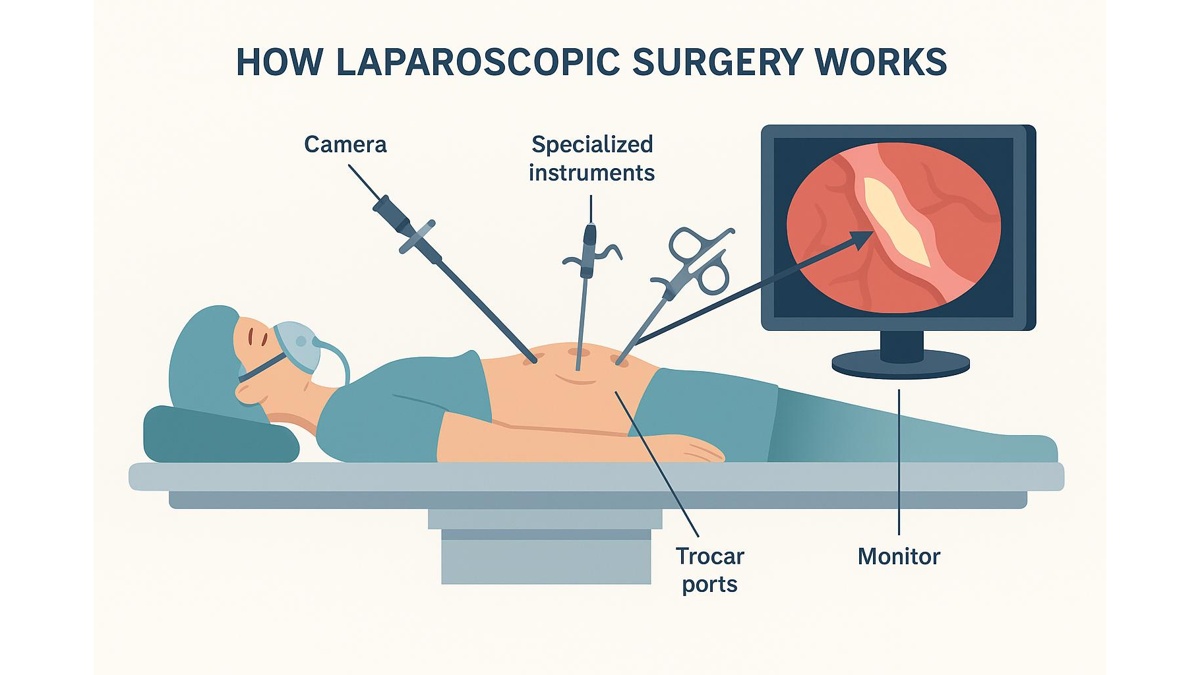
Laparoscopy is a surgical method that allows doctors to view and operate inside the abdomen without making a large incision. The procedure involves inserting a laparoscope a slender tube with a camera and light through a small port, usually near the navel. Carbon dioxide gently inflates the abdominal cavity, creating space for the surgeon to work safely and see clearly.
Several small ports (typically 5–10 mm) are then used to insert specialized instruments. These tools allow surgeons to cut, cauterize, suture, and remove tissue with high precision all while watching the operation on a high-definition monitor.
At Shenandoah Valley Surgical Associates, laparoscopic surgery is routinely performed for:
- Gallbladder removal (cholecystectomy) — to treat gallstones or chronic inflammation.
- Hernia repair — both inguinal and abdominal, with or without surgical mesh.
- Appendectomy — for acute appendicitis.
- Colon and small-bowel surgery — for diverticulitis, polyps, or early-stage cancer.
- Anti-reflux procedures — to correct gastroesophageal reflux disease (GERD).
Each procedure is carefully evaluated to determine whether laparoscopic or traditional surgery is most appropriate. For the majority of patients, the minimally invasive approach offers the best balance of safety, recovery, and long-term results.
Why Laparoscopy Has Become the Preferred Approach
Laparoscopic surgery has become the preferred approach not just for its smaller incisions, but because it supports better healing and faster recovery. By minimizing tissue trauma and reducing blood loss, laparoscopic techniques help the body recover naturally.
Most patients experience less postoperative discomfort, need fewer pain medications, and can return to work or daily life within days instead of weeks. For surgeons, laparoscopy offers enhanced visualization and control, improving precision in even the most delicate procedures.
Advantages for Patients – Less Pain, Faster Recovery
Minimally invasive surgery has transformed patient care by offering faster recovery, less pain, and better outcomes through smaller, more precise procedures.
The Shift Toward Minimally Invasive Surgery
The shift toward minimally invasive surgery has completely changed the patient experience. What once required a large incision and weeks of recovery can now be performed through small keyhole openings, with patients often returning home the same day.
At Shenandoah Valley Surgical Associates (SVSA) in Fishersville, Virginia, our surgeons have seen firsthand how laparoscopic and other minimally invasive techniques improve outcomes across nearly every surgical specialty. The advantages are clear, measurable, and life-changing.
Smaller Incisions, Less Pain
Traditional open surgeries typically require incisions between 10 and 15 centimeters long. These large wounds involve cutting through layers of muscle and tissue, which can cause significant pain during recovery.
Minimally invasive procedures, on the other hand, use tiny incisions – usually 1 to 2 centimeters. Because less tissue is disturbed, patients experience less pain, less bleeding, and fewer wound complications. Most patients report needing far fewer pain medications and feeling comfortable enough to move around just hours after surgery.
Faster Recovery and Shorter Hospital Stay
Faster recovery is one of the most recognized benefits of minimally invasive surgery. With smaller incisions comes a quicker return to normal life. Patients who undergo minimally invasive surgery usually stay in the hospital for just one or two days – or may even go home the same day depending on the type of operation.
In contrast, open surgery often requires a hospital stay of up to a week and several weeks of home recovery.
At SVSA, postoperative follow-up focuses on helping patients resume light activity as soon as possible, which promotes circulation and accelerates healing. Many individuals return to work or daily activities within five to seven days.
Lower Risk of Complications
Smaller incisions also mean a reduced risk of infection, hernias, or scarring. The precise nature of laparoscopic tools allows surgeons to control bleeding and avoid unnecessary trauma to surrounding tissues.
Additionally, less exposure of internal organs to air and surgical instruments decreases inflammation, helping patients recover faster and with fewer complications.
Better Cosmetic and Functional Outcomes
For many patients, appearance matters – especially for younger individuals or those in public-facing professions. Minimally invasive surgery offers virtually invisible scars, usually hidden in natural skin folds or near the navel.
Beyond aesthetics, these smaller incisions preserve the strength of abdominal muscles, reducing the likelihood of postoperative hernias and maintaining long-term core stability.
Safety and Risk Control in Minimally Invasive Surgery
Patient safety is at the heart of every minimally invasive procedure. One of the greatest misconceptions about minimally invasive surgery is that it’s less “serious” than open surgery. In reality, these operations require advanced training, specialized equipment, and rigorous safety standards to ensure excellent outcomes.
Comprehensive Preoperative Evaluation
Before surgery, patients undergo a thorough evaluation that includes medical history, blood tests, and imaging. This allows the surgical team to identify any conditions such as heart disease, diabetes, or respiratory issues that could increase operative risk.
Each procedure is planned individually, and the safest approach (laparoscopic or open) is chosen based on the patient’s anatomy, health status, and surgical history.
Intraoperative Monitoring and Precision
During surgery, advanced monitoring systems track heart rate, oxygen levels, and blood pressure continuously. High-definition laparoscopic cameras give surgeons a magnified, illuminated view of the surgical site — enhancing precision while minimizing tissue trauma.
Sterile techniques, state-of-the-art instruments, and real-time imaging all work together to create a controlled, low-risk environment.
Postoperative Care and Early Mobilization
After the operation, patients are encouraged to move, eat, and breathe deeply as soon as it’s safe. This proactive approach helps prevent blood clots, pneumonia, and other postoperative complications.
Comparison Table: Open vs. Minimally Invasive Surgery
| Parameter | Open Surgery | Minimally Invasive Surgery |
|---|---|---|
| Incision Size | 10–15 cm | 1–2 cm |
| Postoperative Pain | Moderate to severe | Minimal |
| Hospital Stay | 5–7 days | 1–2 days |
| Recovery Time | 3–4 weeks | 5–7 days |
| Infection Risk | Higher | Lower |
| Scarring | Noticeable | Minimal |
The Surgeon’s Perspective
Behind every minimally invasive operation is a highly trained team. Surgeons at Shenandoah Valley Surgical Associates continually refine their skills through advanced training and participation in national surgical programs.
Recovery, Prevention, and Patient Education
Minimally invasive surgery is not just a medical advancement it’s a patient-centered philosophy. By reducing trauma, pain, and recovery time, this approach empowers patients to take control of their health sooner. Still, the success of any surgical procedure depends not only on the operation itself but also on how patients prepare and recover afterward.
Recovery After Minimally Invasive Surgery
Because laparoscopic and minimally invasive procedures cause less damage to surrounding tissues, recovery tends to be smoother. Patients usually start walking within hours after surgery and can eat light meals the same day. Early mobility helps prevent blood clots and speeds up the healing process.
Postoperative discomfort is generally mild and can be managed with over-the-counter pain medication. Most people return to normal activity including work and light exercise within five to seven days, though this varies depending on the type of surgery.
Surgeons typically recommend:
- Keeping incisions clean and dry.
- Avoiding heavy lifting for one to two weeks.
- Following a balanced diet to promote healing.
- Reporting any signs of fever, redness, or unusual swelling.
Follow-up visits ensure that the healing process remains on track and that no complications develop.
Prevention and Long-Term Health
One of the biggest advantages of modern surgery is how it aligns with preventive care. Many conditions that once required emergency operations such as gallbladder inflammation or hernias can now be treated electively, before complications occur.
Preventing surgical disease involves addressing lifestyle factors early:
- Maintaining a healthy weight to reduce abdominal pressure and hernia risk.
- Managing cholesterol and blood sugar to prevent gallbladder and intestinal problems.
- Staying physically active to support bowel health and reduce recovery time after any procedure.
Regular check-ups and early imaging can detect conditions like gallstones, hernias, or diverticular disease before they become emergencies, making surgery safer and simpler.
FAQ – Common Questions About Laparoscopic and Minimally Invasive Surgery
What types of operations can be done laparoscopically?
Most general surgical procedures involving the abdomen or pelvis can now be performed using laparoscopic methods. These include gallbladder removal, hernia repair, appendectomy, and parts of colon or stomach surgery. In many cases, even more complex procedures such as anti-reflux or bariatric operations are done through small incisions.
Is laparoscopic surgery safe for older adults?
Yes. Minimally invasive surgery is often safer for older patients than open surgery because it causes less stress on the body. Smaller incisions mean less pain, faster mobility, and fewer complications such as lung infections or blood clots. Preoperative assessment ensures that every patient’s risks are carefully managed.
How long does recovery take?
Most patients resume normal activities within one week. Some may need additional time for complete internal healing, especially after abdominal or colon surgery. Your surgeon will provide a personalized recovery plan based on the procedure and your health status.
When can I return to work or drive?
Many patients can drive within 3–5 days after surgery, as long as they are off prescription pain medication and can move comfortably. Office or light work is often resumed within a week; physically demanding jobs may require 2–3 weeks of recovery.
Are there restrictions after discharge?
For the first week, it’s best to avoid heavy lifting, strenuous activity, or swimming. Gradual return to exercise is encouraged after your surgeon’s approval. Maintaining hydration, walking daily, and eating a fiber-rich diet will support smooth recovery and prevent constipation, which is common after anesthesia.
Why Minimally Invasive Surgery Is the Future
Minimally invasive techniques represent more than just smaller incisions they embody a shift toward precision medicine. Surgeons now use enhanced visualization and micro-instruments to perform procedures with accuracy previously unimaginable in traditional open surgery.
For patients, this translates into:
- Better outcomes
- Lower risk of infection
- Shorter hospital stays
- Faster return to normal life
The approach is especially valuable in community hospitals and regional centers across Virginia, where patients benefit from high-quality care close to home. Skilled laparoscopic surgeons continue to expand the range of conditions that can be treated with this technique, bringing modern surgical care to more people every year.
Learn About Modern Surgical Options
If you’ve been told you may need surgery for gallbladder issues, hernia, or digestive conditions it’s worth asking whether a minimally invasive approach is right for you. Modern general surgery offers big results through small incisions less pain, fewer complications, and faster recovery.
Author:
Dr. William G. Thompson, MD, FACS

Sources
- American College of Surgeons (ACS) – Is Minimally Invasive Surgery at an Inflection Point?
- Mayo Clinic – Minimally Invasive Surgery: Overview
- NIH / PMC – Minimally Invasive Surgery: What It Is, Types, Benefits & Risks
- Cleveland Clinic – Minimally Invasive Surgery | Overview
- Johns Hopkins Medicine – Minimally Invasive Surgical Techniques