





























Surgery is only the first step toward healing what happens afterward is equally important. Postoperative care plays a critical role in preventing complications, promoting wound healing, and helping patients regain their strength safely.
When patients follow a structured recovery plan, they not only recover faster but also experience fewer setbacks such as infections, wound reopening, or prolonged pain. Effective postoperative management minimizes hospital readmissions and enhances the long-term success of the surgical procedure.
The first days after surgery are especially crucial. During this time, your body directs its energy toward healing tissues, controlling inflammation, and protecting against infection. Adequate rest, proper nutrition, pain control, and wound care form the foundation of this process.
In the Shenandoah Valley region, patients undergoing outpatient surgery and recovery often benefit from coordinated postoperative support. Surgeons and nurses monitor progress closely, ensuring each patient understands how to manage their recovery safely at home.
Core Principles of Postoperative Rehabilitation
Postoperative recovery follows predictable biological patterns. Understanding these stages helps patients know what to expect and how to participate in their own healing process.
| Recovery Period | Main Patient Tasks | Physician Follow-up |
|---|---|---|
| Days 1–3 | Pain management, rest, limited movement | Surgical wound inspection |
| Days 4–14 | Wound care, balanced diet, gentle mobility | Stitch removal or dressing change |
| 15+ days | Gradual activity, long-term observation | Complication monitoring |
Pain Control, Wound Care, and Nutrition
Pain control is a key part of healing. Uncontrolled pain can raise blood pressure, delay wound repair, and limit physical movement. Doctors typically prescribe short-term pain relievers or anti-inflammatory medications. Using them as directed helps you stay comfortable and move more freely.
Wound care requires attention and hygiene. Always keep the incision clean and dry. Change dressings as instructed, avoid touching the area with unwashed hands, and watch for signs of infection such as redness, swelling, or discharge. Your healthcare provider will guide you on when it’s safe to shower often within the first few days, depending on the type of incision.
Nutrition supports tissue repair from the inside. After surgery, your body needs extra protein, vitamins (A, C, D), and minerals like zinc and iron to rebuild cells and strengthen the immune system. Hydration is equally vital water helps flush out anesthesia residues and promotes circulation.
A recovery-friendly diet includes:
- Lean proteins (chicken, fish, eggs)
- Fruits and vegetables rich in antioxidants
- Whole grains for steady energy
- Probiotic foods such as yogurt to aid digestion
Avoid alcohol and tobacco both slow the healing process and increase the risk of complications.
Warning Signs That Require Medical Attention
Even with excellent postoperative care, complications can occasionally develop. Recognizing early warning signs and responding promptly can make the difference between a smooth recovery and a serious setback.
Signs of Wound Infection
Watch your incision closely. Contact your healthcare provider if you notice:
- Increasing redness, warmth, or swelling around the wound
- Pus-like or foul-smelling discharge
- Fever higher than 100.4°F (38°C)
- Persistent pain that worsens instead of improving
Infections can develop when bacteria enter the surgical site, often within the first week after surgery. Early intervention with antibiotics or drainage usually prevents larger issues.
Bleeding or Fluid Accumulation
Small amounts of clear fluid from the incision can be normal, but active bleeding or large fluid buildup is not. If you notice bleeding that soaks through the bandage or significant swelling under the incision, call your surgeon immediately.
Difficulty Breathing or Chest Pain
After general anesthesia, mild chest discomfort or fatigue is common, but sudden shortness of breath, chest pain, or coughing up blood may indicate a blood clot (pulmonary embolism). This is a medical emergency seek care immediately.
Digestive or Urinary Problems
Constipation is common after surgery due to anesthesia, pain medication, or reduced mobility. Drinking fluids, walking gently, and eating fiber help prevent it. However, inability to urinate, severe abdominal bloating, or vomiting could signal deeper issues requiring medical evaluation.
Phases of Recovery After Surgery
To help visualize the healing journey, medical specialists often describe recovery as occurring in three overlapping phases each with its own focus and goals.
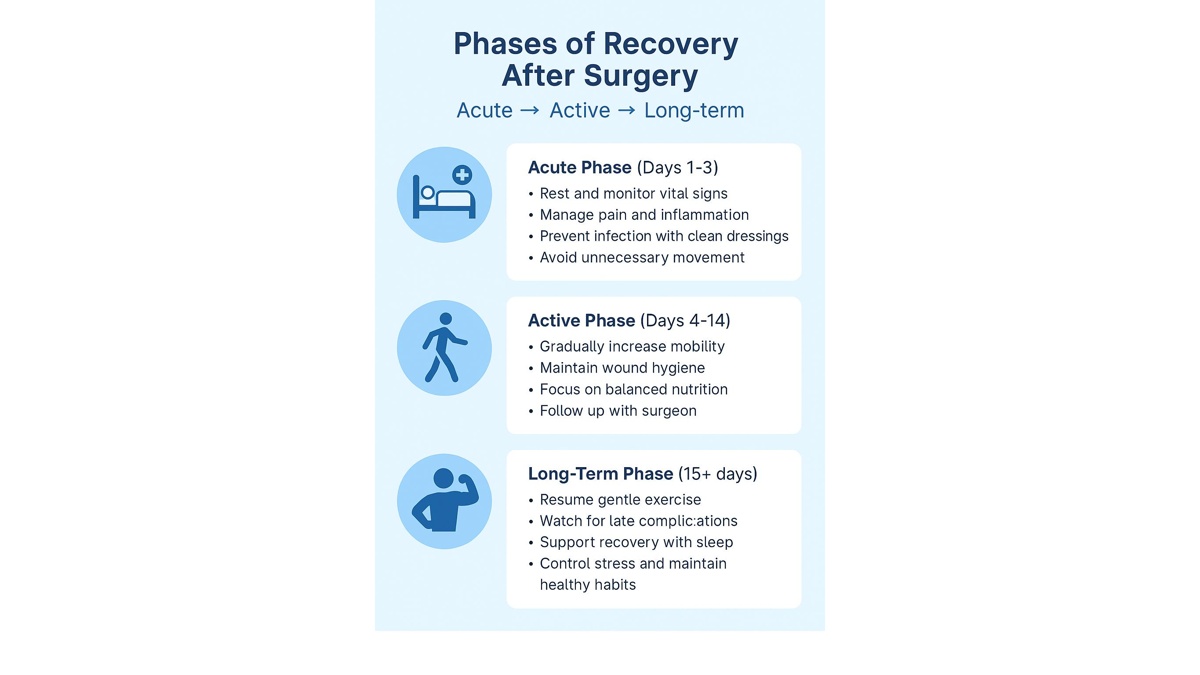
Acute Phase (Days 1–3)
- Rest and monitor vital signs
- Manage pain and inflammation
- Prevent infection with clean dressings
- Avoid unnecessary movement or heavy lifting
Active Phase (Days 4–14)
- Gradually increase mobility light walking helps circulation
- Maintain wound hygiene and follow dressing-change schedule
- Focus on balanced nutrition: protein-rich meals, hydration
- Follow up with your surgeon for suture removal or checkup
Long-Term Phase (15+ days)
- Resume gentle exercise and return to daily activities
- Continue watching for late complications (scarring, swelling, numbness)
- Support recovery with sleep, stress control, and healthy habits
This structured approach promotes safe, progressive healing, helping patients rebuild strength and confidence step by step.
Surgeons’ Tips for Returning to Everyday Life
Returning to your normal routine is an exciting milestone but rushing can undo your progress. Here are insights from experienced surgeons on pacing your recovery safely.
Start Small and Listen to Your Body
Resume daily activities gradually. Begin with light tasks like walking, stretching, or simple household chores. Avoid lifting anything heavier than 10 pounds during the first two weeks unless cleared by your doctor.
Monitor Energy and Fatigue
It’s normal to feel tired more easily after surgery. The body is still directing energy to internal healing. Short naps, balanced meals, and gentle movement can help restore energy without strain.
Emotional Recovery Matters Too
Surgery can affect mood and confidence. Some patients experience temporary sadness, frustration, or anxiety. Maintaining communication with your healthcare team, loved ones, or support groups can make recovery emotionally smoother.
Don’t Skip Follow-Up Visits
Your follow-up appointments allow doctors to track wound healing, adjust medications, and identify issues early. Even if you feel well, it’s crucial not to skip these check-ins many complications can be prevented with timely evaluation.
Frequently Asked Questions (FAQ)
When can I take a shower after surgery?
Usually within 24–48 hours, unless your doctor advises otherwise. Keep the incision clean and dry, and avoid baths or pools until the wound fully heals.
What foods help speed up healing?
Focus on protein-rich meals, fruits, vegetables, and whole grains. Staying hydrated and eating balanced meals will support faster tissue repair.
When can I return to work?
Most patients can go back to light work in two to three weeks, depending on the surgery and their overall condition. Always confirm timing with your surgeon.
Can I exercise after surgery?
Gentle walking is encouraged early on, but intense workouts should wait until your doctor approves usually after four to six weeks.
What signs of complications should I never ignore?
Severe pain, fever, unusual bleeding, or redness around the incision are warning signs. Contact your healthcare provider immediately if these appear.
Surgeons’ Final Advice for Long-Term Recovery
Long-term recovery isn’t only about physical healing it’s about building healthier habits that protect you from future health problems.
Surgeons emphasize three key principles for every patient:
- Stay consistent. Follow your postoperative instructions even when you start to feel “normal.”
- Stay active. Gradual movement prevents stiffness and strengthens muscles safely.
- Stay connected. Maintain communication with your surgical team, especially if anything feels off.
Healing is not a race. Each step rest, nutrition, movement, follow-up brings you closer to full recovery and long-term wellness.
Get Personalized Recovery Guidance
If you’ve recently undergone surgery or are preparing for one, proper postoperative care is essential for fast, safe recovery. Your surgeon and care team are your best resources for personalized recommendations based on your procedure and health status.
Author:
Dr. Jacek J. Paszkowiak, MD, FACS

Sources
- Society for Vascular Surgery – SVS Perioperative Management Guide
- Centers for Disease Control and Prevention (CDC) – Surgical Site Infection (SSI) Prevention Guideline
- National Institutes of Health (MedlinePlus) – After Surgery
- Mayo Clinic – Pain medicines after surgery
- Cleveland Clinic – Incision & Surgical Wound Care