Medical Disclaimer
This article is for educational purposes only and does not replace professional medical advice. Tadalafil is a prescription medication and should be used only under the supervision of a licensed healthcare provider. Always consult your physician before starting or adjusting erectile dysfunction treatment.
Medically reviewed by William L. Faulkenberry, II, MD, FACS
Last updated: June 2026
Recommended Cialis Dosage for Erectile Dysfunction
Understanding proper cialis dosage is essential for both safety and effectiveness. Although tadalafil is well tolerated in most men, dosing should be individualized based on response, age, cardiovascular health, and concurrent medications.
Patients comparing dosing strategies often evaluate tadalafil alongside other PDE5 inhibitors to determine the best fit for their lifestyle and cardiovascular profile. A broader clinical overview of how different agents compare is available in our guide to Best erectile dysfunction medications in 2026.
For on-demand treatment of erectile dysfunction, the typical starting tadalafil dosage is 10 mg taken prior to anticipated sexual activity. The medication may be taken at least 30 minutes before activity, though onset can vary slightly between individuals. If response is insufficient and side effects remain mild, the dose may be increased to 20 mg. This is considered the cialis maximum dose for as-needed use. Patients should not exceed one dose within a 24-hour period.
Conversely, some men may require a reduced starting dose of 5 mg, particularly if they are sensitive to vasodilatory effects or are taking medications that influence tadalafil metabolism. When comparing cialis 10mg vs 20mg, the difference lies primarily in erectile rigidity and duration consistency rather than onset speed. Higher doses may improve response in men with more pronounced vascular impairment but also increase the likelihood of side effects such as headache or back pain.
Tadalafil’s extended half-life differentiates it from other PDE5 inhibitors. Because of this pharmacokinetic profile, dose selection must consider both immediate response and cumulative exposure. Patients evaluating broader tadalafil treatment options can review prescription pathways and safety screening considerations here, especially when determining long-term therapy plans.
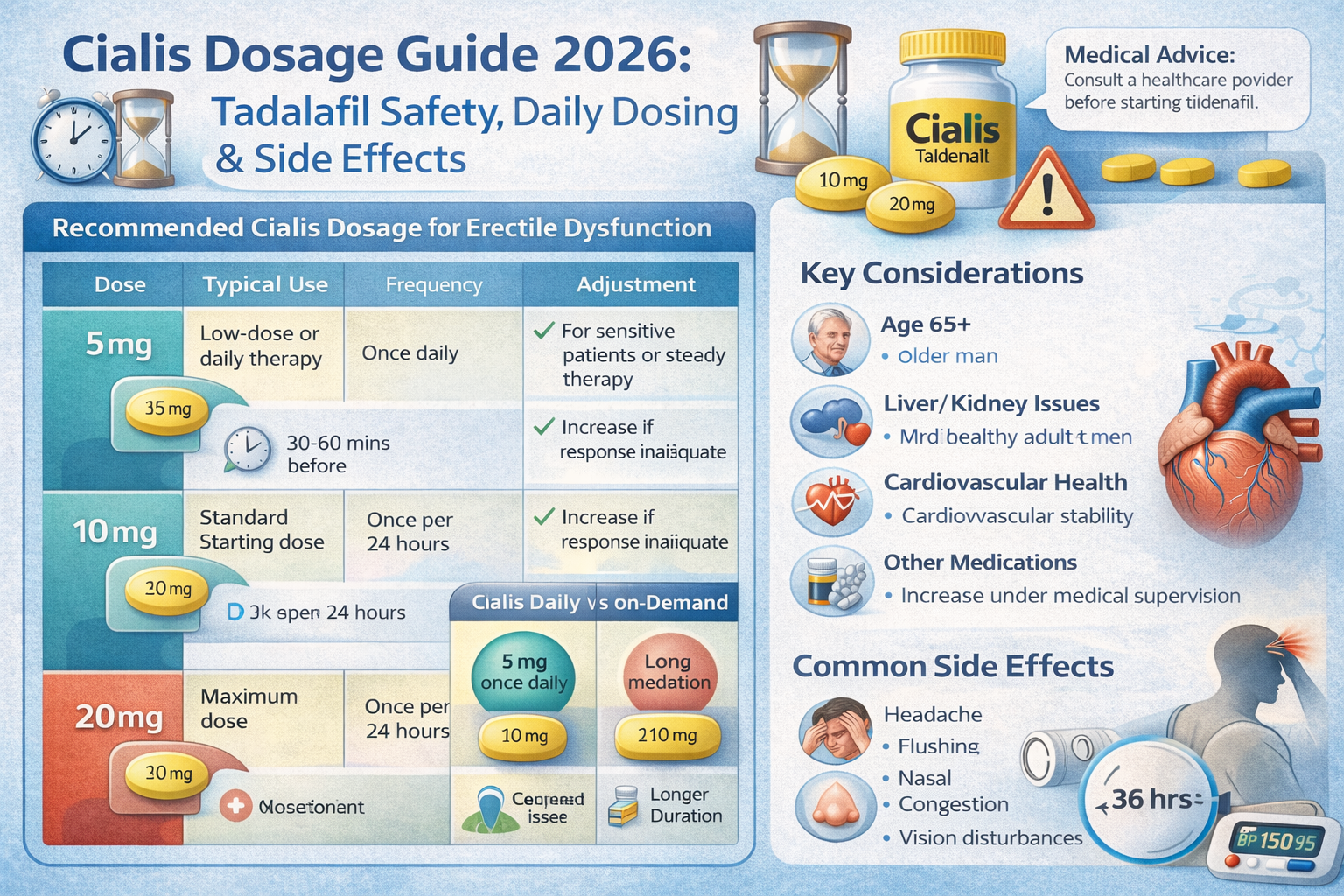
Tadalafil Dosage Overview
| Dose | Typical Use | Adjustment Considerations | Maximum Frequency |
| 5 mg | Low-dose or daily therapy | For sensitive patients or long-term steady use | Once daily |
| 10 mg | Standard starting on-demand dose | Increase if response inadequate | Once per 24 hours |
| 20 mg | Maximum on-demand dose | Use only if tolerated | Once per 24 hours |
Correct dose selection significantly reduces the need for switching medications and minimizes adverse reactions.
Cialis 5mg Daily vs On-Demand Use
One of tadalafil’s distinguishing features is its availability in both daily and as-needed dosing formats. This flexibility allows therapy to be tailored to lifestyle and frequency of sexual activity. Cialis 5mg daily maintains a steady plasma concentration, eliminating the need to time medication before sexual activity. Many men who anticipate activity multiple times per week prefer this approach because it promotes spontaneity.
The tadalafil daily dose is generally 2.5 mg or 5 mg taken at the same time each day. Lower daily doses are sometimes initiated in men who are older or taking antihypertensive medications. On-demand dosing, typically 10 mg or 20 mg, may be preferred by men who use medication less frequently. This model reduces overall exposure while still providing extended duration compared to shorter-acting alternatives.
When considering daily therapy, clinicians evaluate cardiovascular stability, blood pressure control, and potential interaction risks. Daily dosing may also be prescribed for patients with concurrent lower urinary tract symptoms, further influencing selection. Understanding the difference between daily and on-demand use helps patients avoid unnecessary dose escalation and supports safer long-term management.
How Long Does Cialis Last and What Influences Duration?
One of the most searched questions about tadalafil is how long does Cialis last and whether its duration is consistent across patients. The extended half-life of tadalafil is the defining feature that differentiates it from shorter-acting PDE5 inhibitors. Tadalafil has an elimination half-life of approximately 17.5 hours. Because of this, its physiological effects may persist for up to 36 hours after a single dose. This prolonged window allows for greater flexibility compared to medications that remain active for only a few hours.
However, duration is not identical for every patient. Several physiological variables influence how long tadalafil remains clinically effective. Metabolism plays a central role. Tadalafil is processed primarily by hepatic delivery through the CYP3A4 pathway. Slower metabolism may extend drug presence, while faster metabolic clearance may slightly reduce duration. Cardiovascular health also impacts responsiveness. Since tadalafil enhances nitric oxide–mediated vasodilation, endothelial function influences overall erectile response. Patients with well-controlled blood pressure and stable vascular health often experience more predictable duration.
Unlike sildenafil, tadalafil absorption is minimally affected by food intake. High-fat meals do not significantly delay onset or reduce peak concentration. This pharmacokinetic stability is one reason many men prefer tadalafil for flexibility. Alcohol consumption may still influence erectile performance. While moderate intake is generally tolerated, excessive alcohol may reduce erectile quality independently of medication.
Daily therapy alters the pharmacodynamic profile. With cialis 5mg daily, steady-state plasma levels are achieved after several consecutive doses. This results in consistent baseline responsiveness rather than episodic peaks. Men using daily therapy often report greater spontaneity without planning dosing around specific events. Understanding these variables prevents unnecessary dose escalation when timing, lifestyle, or metabolic factors may explain perceived variability.
Tadalafil Side Effects and Tolerability
When patients research tadalafil side effects, they are typically concerned about safety and long-term tolerability. Overall, tadalafil demonstrates a favorable safety profile when prescribed appropriately. Most adverse effects are mild and dose-dependent.
Common reactions include:
- Headache
- Flushing
- Nasal congestion
- Dyspepsia
- Back pain
- Myalgia
Headache and flushing result from systemic vasodilation. These symptoms usually resolve as drug levels decline. Back pain is reported more frequently with tadalafil compared to some shorter-acting agents. The proposed mechanism involves inhibition of PDE11 in skeletal muscle tissue. Symptoms typically begin 12 to 24 hours after dosing and resolve within 48 hours without intervention.
In most cases, reducing the cialis dosage improves tolerability. For example, decreasing from 20 mg to 10 mg may significantly reduce side effects while maintaining efficacy.
Serious adverse events are rare but require immediate attention. These include:
- Priapism lasting longer than four hours
- Sudden vision loss
- Sudden hearing loss
- Severe hypotension or syncope
When patients ask is Cialis safe, the answer depends on proper medical screening and respect for contraindications. Under physician supervision, tadalafil has demonstrated a strong long-term safety record.
Tadalafil Interactions and Contraindications
A critical component of safe therapy involves understanding tadalafil interactions and identifying contraindications before prescribing.
The most important contraindication involves nitrate medications. The combination of cialis and nitrates can lead to severe hypotension due to synergistic vasodilation. This includes short-acting nitroglycerin and long-acting nitrate formulations. Patients using nitrates for angina or other cardiovascular conditions should not take tadalafil.
Caution is required when tadalafil is used alongside alpha-blockers prescribed for hypertension or benign prostatic hyperplasia. Both agents can lower blood pressure. In such cases, clinicians may initiate tadalafil at a lower dose and separate dosing times. Tadalafil is metabolized via the CYP3A4 enzyme system. Strong inhibitors such as certain antifungal agents, protease inhibitors, and some antibiotics can increase plasma concentration. Dose adjustment may be required to prevent excessive exposure.
Patients taking multiple antihypertensive medications should undergo careful review. Although tadalafil generally causes modest blood pressure reduction, additive effects may occur.
Cialis in Patients with Diabetes and Cardiovascular Disease
Erectile dysfunction frequently coexists with metabolic and cardiovascular disorders. Patients with diabetes often experience endothelial dysfunction and microvascular damage, which may affect treatment response. When discussing cialis for diabetes, it is important to recognize that glycemic control influences erectile physiology. Chronic hyperglycemia contributes to vascular stiffness and reduced nitric oxide availability.
A detailed explanation of how metabolic changes affect erectile function is discussed in our overview of diabetes-related vascular complications. Improving glycemic control often enhances medication response.
Similarly, patients with known arterial disease require cardiovascular evaluation before initiating therapy. Broader considerations regarding vascular risk evaluation in individuals with aneurysmal or advanced arterial disease are outlined here.
Sexual activity represents moderate exertion. Therefore, men with unstable cardiovascular disease, recent myocardial infarction, or uncontrolled hypertension should undergo comprehensive assessment before starting tadalafil. When cardiovascular status is stable and contraindications are respected, tadalafil remains an effective option with predictable performance.
Clinical Safety Summary and Long-Term Use Considerations
Tadalafil remains one of the most extensively studied PDE5 inhibitors in clinical practice. When used according to recommended cialis dosage guidelines, it demonstrates predictable efficacy and a favorable safety profile.
Long-term therapy requires ongoing cardiovascular awareness rather than dose escalation. Erectile dysfunction often reflects underlying endothelial dysfunction. For this reason, sustained improvement depends not only on medication but also on:
- Blood pressure control
- Lipid management
- Glycemic stability
- Smoking cessation
- Weight optimization
Medication enhances erectile physiology, but vascular health determines durability of response.
Men using cialis 5mg daily should undergo periodic evaluation to ensure blood pressure remains stable and no new contraindications have developed. Patients taking antihypertensive therapy or managing diabetes benefit from coordinated monitoring, particularly when adjusting dose.
Tadalafil does not create dependency, and pharmacologic tolerance is uncommon. If effectiveness appears reduced, clinicians typically reassess cardiovascular health, metabolic control, and psychological factors before increasing dose. Appropriate prescribing, adherence to maximum dosing limits, and respect for contraindications ensure safe long-term use.
Frequently Asked Questions
What is the correct starting Cialis dosage?
The standard starting cialis dosage for on-demand use is 10 mg. Daily therapy typically begins at 2.5 mg or 5 mg depending on clinical evaluation.
Can I take 20 mg of Cialis every day?
No. Twenty milligrams is the maximum on-demand dose and should not be taken more than once in 24 hours. Daily use requires lower dosing.
How long does Cialis stay in the system?
Tadalafil has a half-life of approximately 17.5 hours. Measurable drug levels may remain present for more than 24 hours, which explains its extended therapeutic window.
Is Cialis safe for men with high blood pressure?
In patients with controlled hypertension, tadalafil is generally safe under medical supervision. It must not be combined with nitrate medications.
What should I do if Cialis does not work?
Ensure correct timing, avoid excessive alcohol, and confirm adequate stimulation. If response remains inadequate, consult a healthcare provider before increasing the dose.